
THE HISTORY OF DOG FOOD
by Dr. Rachel Addleman, DVM, DiplABVP, CVA
Veterinarian and Certified Veterinary Acupuncturist, Dr. Addleman has advanced training and Board Certification in
feline medicine. She practices in Houston, Texas and can be found at
AnimalFixer.com
 In
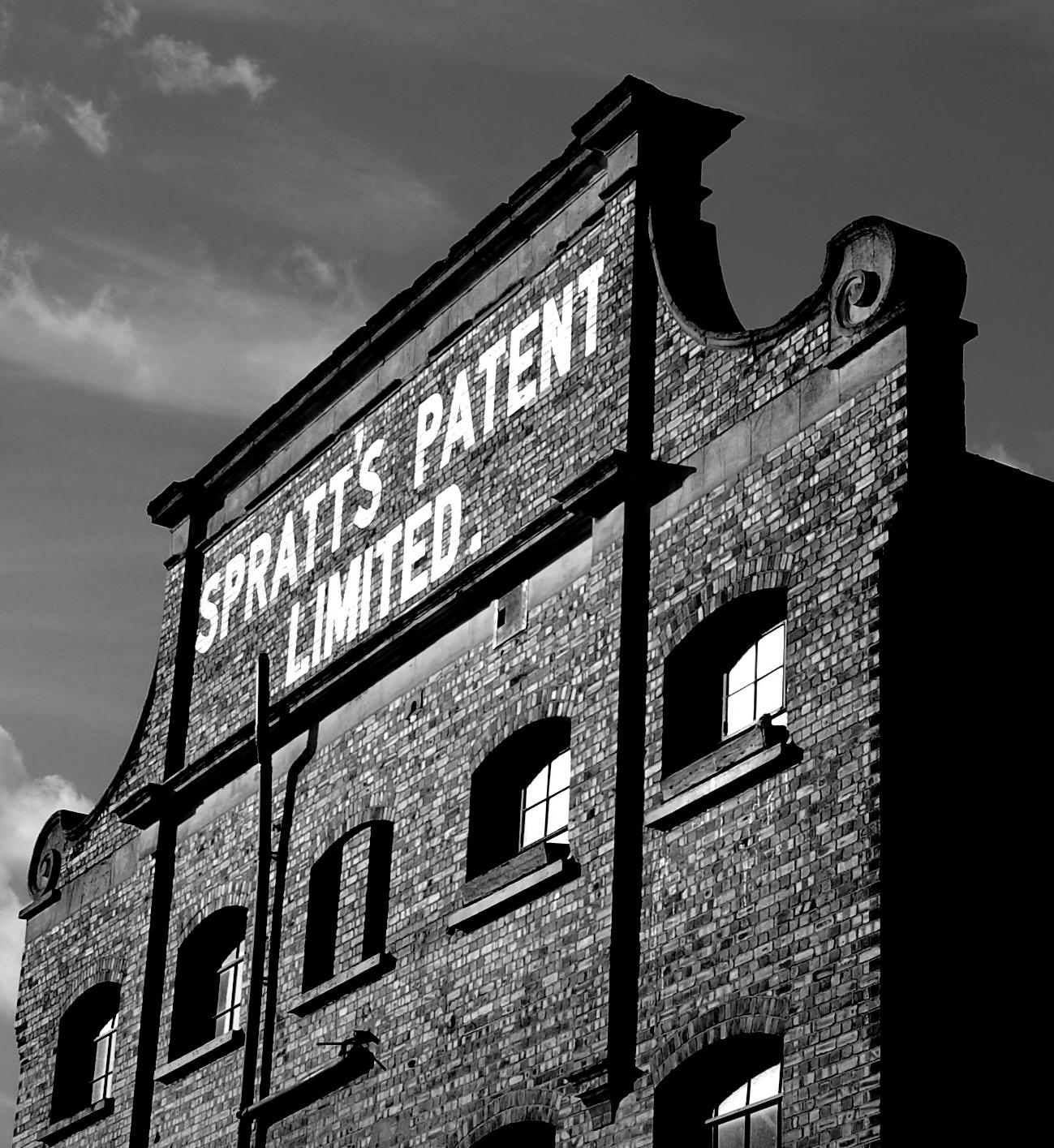
1860, James Spratt, an electrician and lightning rod salesman from
Ohio, was the first to manufacture a dried dog biscuit food. While
living in England, Spratt observed street dogs eating ship hardtack,
the non-perishable food made from processed cereals. The idea for
commercial dog food was born.
In
1860, James Spratt, an electrician and lightning rod salesman from
Ohio, was the first to manufacture a dried dog biscuit food. While
living in England, Spratt observed street dogs eating ship hardtack,
the non-perishable food made from processed cereals. The idea for
commercial dog food was born.
Spratt called his biscuit the “Patented Meat Fibrine Dog Cake”. His company
began operations in America in the 1870s. Spratt appears to have been the
first commercial producer of cat food, too.
Prior to the advent of Spratt’s Dog Cake, household pets were generally fed
table scraps. Spratt was a relentless advertiser, convincing Americans to
purchase his product by targeting participants and spectators at dog shows.
In the 1950s, General Mills acquired Spratt’s US business.
In 1907, F.H. Bennett Biscuits Co. introduced bone shaped ‘Milk-Bone’ dog
biscuits. His biscuits were “whole nutrition” made with meats, cereals,
milk, liver oil, and vitamins. They were packaged in boxes, rather than in
bulk, to meet the needs of different breed sizes.
 The
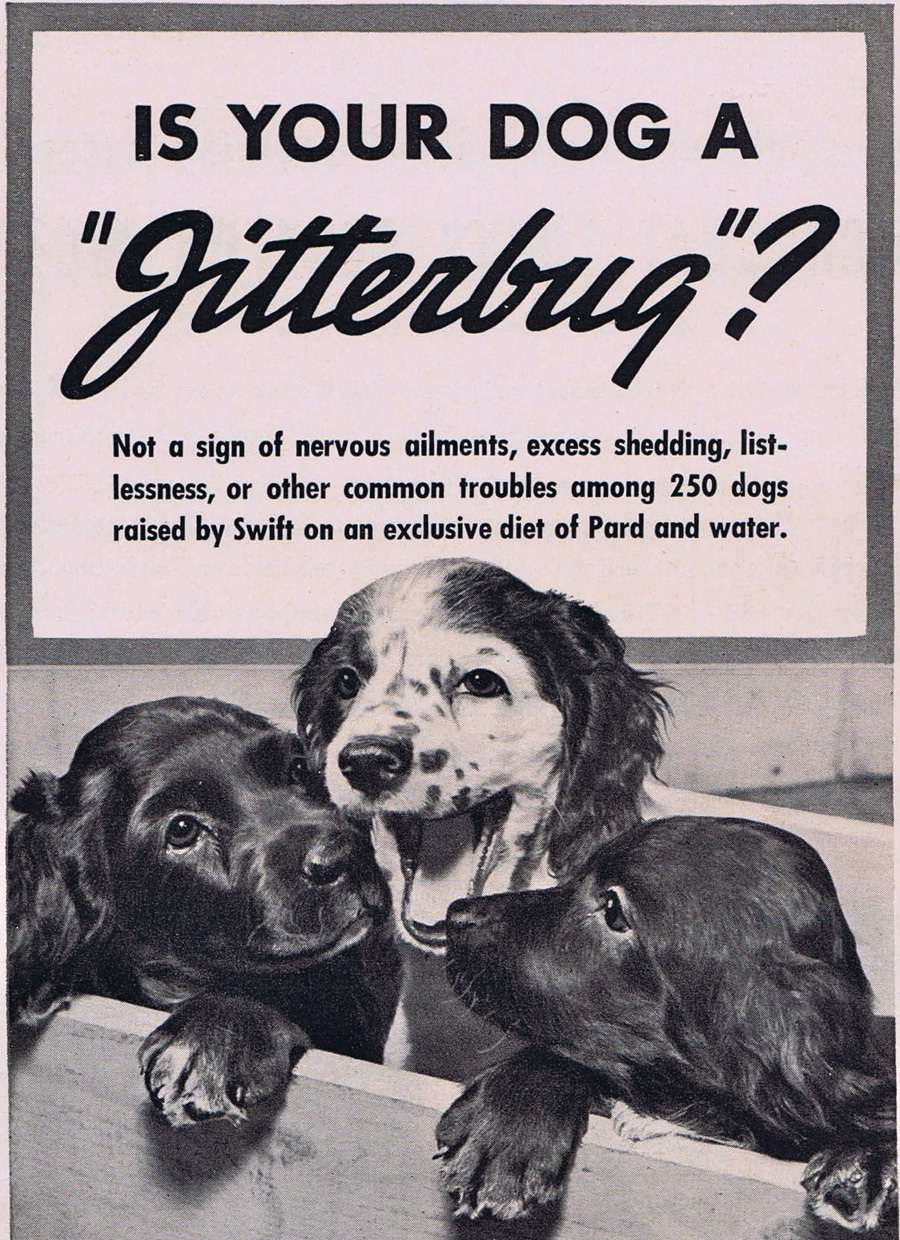
1930’s saw the introduction of a dry dog meat-meal produced by Gaines Food
Company. Clarence Gaines marketed his “100% complete and balanced
nutrition” by exhibiting his own pointer at a well-known dog show. General
Foods purchased Gaines in 1943.
The
1930’s saw the introduction of a dry dog meat-meal produced by Gaines Food
Company. Clarence Gaines marketed his “100% complete and balanced
nutrition” by exhibiting his own pointer at a well-known dog show. General
Foods purchased Gaines in 1943.
After WWI and the invention of cars, horsemeat became very cheap. An
Illinois horse dealer, P.M. Chappel, started canning horsemeat under the
brand name of Ken-L Ration. Chappel and his brothers were said to have gone
up and down Chicago streets with cans of horsemeat trying to persuade
owners of pet shops to display and use it. Until 1968, Ken-L Ration was the
sponsor of the pet kennel at Disneyland, known as Ken-L Land. Ken-L ration
was purchased by Quaker Oats, and the brand was sold to the H.J. Heinz Co.
in 1995.
During WWII, metal used for canned dog food was set aside for the war
effort. This nearly ruined the canned pet food industry. Dog food
manufacturers later experienced difficulties in maintaining high-quality
products under the conditions of wartime shortages.
Commercial dog foods in the early 1940’s could not maintain an Army dog in
good working condition. So in November 1942, the Quartermaster Corps
authorized the procurement of both commercial dog food and additional meat
to supplement the diet. During March 1944, the Army Veterinary Service
developed a canned dog food by combining ground horsemeat and herring.
After WWII, the pet food industry capitalized on the meat by-products
industry as an economical and convenient way to feed dogs. By then, sales
had reached $200 million. The number one benefit of commercial pet food was
convenience, and with the economy booming, people could now afford the
luxury of pet food.
Canned pet food was the primary type of food sold, but in 1956 the first
dry kibble pet foods were being produced via a process called extrusion,
which forms foods into dry kibble.
Success continued throughout the 1960’s and 1970’s as companies began to
diversify flavors and refined the extrusion technology. The 1980’s saw the
introduction of ailment-specific diets such as those offered by Hill’s Pet
Nutrition for kidney or liver failure. In the 1990’s, pet food was
diversified and now included diets based on the activity level and breed of
dog.
The current consumer trend in pet foods is toward a more natural or
holistic diet, including both raw and homemade human-quality foods.
Nutritional research continues to modify the diet recommendations for pets,
and will continue to do so well into the future.
The pet food industry has grown to $15 billion in annual sales. Convenience
and price are now falling second to fulfilling pet health and wellness.
This means the outlook for the pet food industry will continue to be
excellent.